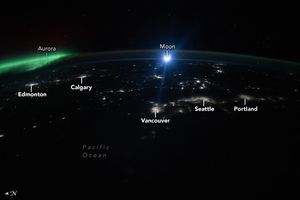
meanwhile, up in the arctic

Jan. 29th, 2026 05:45 am
ljgeoff: (Default)
[personal profile] ljgeoff
A sudden stratospheric warming has caused the polar vortex to collapse, sending a mass of cold air over the mid-latitudes.

Just like this time last year, 2026 is today lowest extent in the 47-8 year satellite record with volume also around record lows and temperatures remaining high. If it chases 2025's trajectory toward another record low maximum I guess that might indicate a possible structural shift in the freezing season in that winter 'recovery' may be weakening for the long term with a potential new baseline for the winter freeze? I guess we'll know the decadal trend for certain in another 0.5–1 decades.
Zeug Gezeugt, (pseudonym), Arctic Ice Forum

book reviews

Jan. 29th, 2026 10:22 am
watervole: (Default)
[personal profile] watervole

 Some recent reads:

'Black Hearts in Battersea' by Joan Aiken  4/5

This is a cheerful romp of a book!

Set in the fictitious reign of James III, it has pretty much everything a young reader could wish for (my 11 year old granddaughter loved it!): adventure, kidnapping, hot air balloons, shipwreck, an eccentric Duke, an attempt to murder the king, lots of fun characters and the lost heir to a Dukedom.

Fast paced and laced with humorous situations.

----------------

We have a deal going on. I read a book my granddaughter recommends and she reads one I rec.  So I've just finished Black Hearts in Battersea, and she enjoyed Heinlen's 'Rolling Stones'.

----------------

Wolf Hall, Hilary Mantel  2/5

I really wanted to like this, as I enjoyed the TV series.

Unfortunately, I dislike most books written in the first person, and most books written in the present tense  - this book is both.

I couldn't get though many pages before giving up.

Hopefully, most other readers won't find this an issue, but for me personally, I can only give it two stars.

----------


Bookshops and Bonedust - Travis Baldree 3/5

This one disappointed me.

Surely a writer as popular as Travis Baldree can get decent beta-readers/editors who actually have some decent general knowledge?

Fantasy requires 'suspension of disbelief'.  I can believe in a lesbian, dwarf baker falling for an orc twice her size.  I can happily buy an evil necromancer, an ailing bookshop, etc.

But I cannot buy a character being stabbed twice rapidly in her leg by a pike.  I'm a re-enactor.  A pike is an 18ft long weapon, cumbersome, and used as part of a pike block.

If you want to stab someone close up, use a spear!

Happened again right at the end.  A warrior sat rosining his bowstring.

Even my 11-year-old granddaughter spotted what was wrong with that...

You rosin a violin bow.  (It makes the horsehair sticker so it has more friction with the violin strings)

Rosining an archer's bowstring (which is definitely not made of horsehair) is complete nonsense.

Without those gaffes, I'd probably have given it a rating of 4, although there was a geological error as well...

It may sound nit-picky, but if I'm absorbed in a story, something that is clearly wrong jerks me out of my belief in that story.

D.O.P.-T.

Jan. 28th, 2026 11:56 pm
weofodthignen: selfportrait with Rune the cat (Default)
[personal profile] weofodthignen
A tree company was out in force on our block this afternoon, performing radical surgery and chipping at two different houses. Always sad to see and hear.

Community Thursdays

Jan. 29th, 2026 12:24 am
ysabetwordsmith: A blue sheep holding a quill dreams of Dreamwidth (Dreamsheep)
[personal profile] ysabetwordsmith
This year I'm doing Community Thursdays. Some of my activity will involve maintaining communities I run, and my favorites. Some will involve checking my list of subscriptions and posting in lower-traffic ones. Today I have interacted with the following communities...


* Posted "How to cope with broken resolutions and the mid-January slump" in [community profile] goals_on_dw.

* Posted "Finding Art in 2026" on [community profile] art.

* Commented on the January 28 post in [community profile] awesomeers.

Alien Romance

Jan. 29th, 2026 12:21 am
ysabetwordsmith: Cartoon of me in Wordsmith persona (Default)
[personal profile] ysabetwordsmith
[personal profile] gs_silva made a post pointing to the Patreon post in which he answers one of my questions about Maurice.  It's just such a unique backstory for the character, and I love it.  :D

The West Faces Snow Drought

Jan. 29th, 2026 05:01 am
[syndicated profile] earthobservatory_iod_feed

Posted by Michala Garrison

Snow covers some of the high-elevation areas across the western U.S. Areas of clouds and valley fog fill parts of the scene.
January 15, 2026

The mountains of the western United States are sporting thin winter coats in early 2026. Although most regions saw average or above-average precipitation in fall and early winter, warmer temperatures meant that much of it fell as rain. The result has been an unusually low snowpack for this time of year, constituting a snow drought.

This image, acquired with the MODIS (Moderate Resolution Imaging Spectroradiometer) on NASA’s Terra satellite, provides a wide view of meager western snow cover on January 15. On that day, measurements derived from satellite observations showed that snow blanketed 142,700 square miles (369,700 square kilometers) of the west. That’s the lowest coverage for that date in the MODIS record dating back to 2001 and less than one-third of the median. Coverage had increased slightly by January 26.

A chart of snow cover area in the western U.S. shows that January 2026 snow coverage was significantly below the January median, as well as the previous minimum from 2015.

In addition to snow cover area, snow water equivalent (SWE)—the amount of water stored in the snowpack—is an important indicator of winter conditions in the West. In early January, the National Integrated Drought Information System reported that snow drought, defined as SWE below the 20th percentile for a given date, was most acute in Washington, Oregon, Colorado, Utah, Arizona, and New Mexico. At least one ground-based monitoring station in every major western watershed recorded the lowest SWE in at least 20 years on January 26, according to data published by the USDA Natural Resources Conservation Service.

Overall, the preceding few months were very wet and warm across the West. For the water year beginning on October 1, 2025, many regions saw average or above-average precipitation. However, record warmth across a vast expanse of the region meant that much of that precipitation fell as rain rather than snow. A December 2025 atmospheric river in the Pacific Northwest was one such warm precipitation event.

One nuance in the snow deficit picture can be found in the Southern Sierra and Northern Rockies, where more precipitation has fallen as snow than rain on the lofty peaks. SWE levels stood above average at some high-elevation locations but were low farther downslope. “This is a classic climate-change, temperature-driven, elevationally dependent snowpack deficit,” said Daniel Swain, climate scientist at the California Institute for Water Resources, in a presentation.

Precipitation falling as rain tends to run off before it can recharge reservoirs and groundwater. On the other hand, winter snowpack that melts in the spring can produce a more metered, sustained water supply. The health of the mountain snowpack has implications for ecosystems, wildfire dynamics, and water availability for agriculture and other uses during drier times of the year.

There is still a lot of winter remaining, and February and March can bring significant amounts of snow. But snowfall in the coming months may not be able to make up for existing deficits. In places such as the Pacific Northwest and the Colorado River Basin that are already dry, snow drought may turn into or exacerbate traditional drought.

NASA Earth Observatory image and chart by Michala Garrison, using MODIS data from NASA EOSDIS LANCE and GIBS/Worldview, and snow cover area data from NSIDC Snow Today. Story by Lindsey Doermann.

References & Resources

You may also be interested in:

Stay up-to-date with the latest content from NASA as we explore the universe and discover more about our home planet.

Snow Buries the U.S. Interior and East
2 min read

Satellites observed a frozen landscape across much of the country after a massive winter storm.

Article
Winter Grips the Michigan Mitten
3 min read

A blanket of snow spanned Michigan and much of the Great Lakes region following a potent cold snap.

Article
Snow Buries Kamchatka
2 min read

December and January brought a series of intense winter storms to the peninsula in far eastern Russia.

Article

The post The West Faces Snow Drought appeared first on NASA Science.

Outgunned

Jan. 28th, 2026 11:47 pm
james_davis_nicoll: (Default)
[personal profile] james_davis_nicoll
RIP Agents Nevada and Alcala, whose reaction to a building-sized rooster was to empty their Mac 10s in its direction, thus ensuring it noticed them.

The player-characters, on the other hand, handled their immediate threat, a truck-sized centipede, more effectively.

Read more... )

Jonathan Coulton: Mandelbrot Set

Jan. 28th, 2026 09:19 pm
thewayne: (Default)
[personal profile] thewayne
Ran into a post on Quora where a guy wrote a Mandelbrot generator in 20 lines of code - HTML/JSON! Someone in the replies posted this song.


https://qr.ae/pCxSS8
landofnowhere: (Default)
[personal profile] landofnowhere
Rather than do a usual Wednesday book post, I'm going to aim for a more in-depth review of the most interesting book I read this past week.

This was another fortitous historical find thanks to the Song of the Lark blog -- I'd previously heard of Johanna Kinkel, and listened to some of her songs, but the blog post there, helped put together for me the arc of her life. She left her abusive first husband and supported herself with a successful musical career (here's her setting of Heine's Die Lorelei). Then she secured a divorce, fell in love and married again. She and her new husband got involved with politics, which led to him being sentenced to death for his part in the revolution of 1848-49. However, she used her connections to first commute his sentence and then help him escape from jail, after which they moved to London and struggled to get by with four children, but despite declining health found a second career writing and giving public lectures on music. Sadly, just days after writing her novel Hans Ibeles in London, she fell out of a window and died; she was only 48.

I also learned from the blog post that Johanna Kinkel's novel had been translated from German into English in 2016 as part of the Ph.D. thesis of Angela Sacher -- so of course I had to try reading it, and it drew me right in with the story, characters, social commentary, and sense of humor. That said, while for the most part I greatly enjoyed reading it, I don't think it entirely works as a novel, and I can only recommend it with the reservations that it's depressing in stretches, and the final section has weird melodrama and uncomfortable race stuff. (More on that later.) I also feel a bit daunted writing this review, since, while there is some scholarly writing about Hans Ibeles in London out there, I could only find one short book review of it on the Internet, and it's quite short (here, in German, also contains a link to a epub of the original German text).

While the book draws deeply on Johanna's family experiences as German refugees in London, the story is only very loosely autobiographical. The titular Hans Ibeles is a small-town composer and conductor in Germany, who gets caught up in the revolution and then has to flee to London, with his wife and their seven children. But it is his wife, Dorothea, steadfast, practical, and domestic, who is the heart of the story -- Hans's character sometimes feels a bit out of focus, but we always know where we are with Dorothea as she navigates the culture shock of moving to England, makes friends, faces difficulties, and ultimately comes to respect her Victorian middle-class neighbors and find a place among them.

There's a scene early in the book, where Hans and Dorothea are making their first round of calls in England, and one of the people they call on is a Great Man of Letters, who turns out to be an incredibly dull conversationalist, more a businessman than an intellectual. Ultimately they come to the following explanation for their disappointment: London is just such a fascinating and multifaceted place that one just has to tell it like it is in order to make a good story. And that is absolutely part of the appeal of this book -- the incredibly detailed depiction of London from an outsider's perspective, as well as showing a side of London society, the German refugee community, that you don't see in more British novels. And this is a book that is deeply concerned with woman's lives and the domestic sphere -- there's a chapter where a character recounts her experiences of working (and seeking work) as a German governess in England, and another chapter about the process of hiring a housemaid in London.

But while one of the literary strengths of this book is its realism, and its unflinching look at the conditions of genteel artistic poverty that reminds me of George Gissing, it is also a book that indulges in some less-realistic tropiness at times. I particularly enjoyed the episodes where various revolutions describe their daring escapes from Germany, including the story of how Hans was hidden in a mausoleum by an eccentric musical young lady. The book also has the appropriate amount of coincidence for a 19th century novel, and some scheming plots that never entirely come into focus. There's a Polish countess who befriends German refugees while secretly working on behalf of Russia -- but her pretensions at being a femme fatale are undermined by the story, as we see her from the perspective of her German governess, and ultimately she comes across as a well-rounded, good-hearted, character.

Two-thirds of the way through I was telling people I liked the book so far but I wasn't sure if I could recommend it until I got to the end. I could tell that the main tension in the story was due to Hans and Dorothea's failing marriage, and I wasn't sure if it would resolve happily or sadly. What I didn't expect is that it would resolve by way of melodrama with some problematic racial stuff. The shape of the ending, as far as Hans and Dorothea are concerned, is a fairly standard sentimental plot of betrayal, forgiveness, and reconcilation. But in order to set off the betrayal Johanna Kinkel feels the need for a Bad Woman, and the countess has been defanged and won't do. Instead, the new Bad Woman is a beautiful woman who murdered her husband and got away with it in the eyes of the law, but to escape the infamy of her reputation has disguised herself in blackface with the help of her devoted mixed-race former nurse. We get one conversation between the two women that does give their characters some depth, but ultimately I don't rally want to excuse the choice made here.

Finally I feel like I should end by emphasizing the feminism of the novel -- this is a book that is deeply focused on its women characters, and interested in the predicament of women's lives in general, which the characters all have different perspectives on -- I'm particularly fond of Meta, the countess's German governess, who is the most outspoken feminist.

I'm really glad I read this book, and it's given me a lot of food for thought, much more than I've brushed on in this review.
mrissa: (Default)
[personal profile] mrissa
 

Review copy provided by the publisher. Also the author is a dear friend, and I read an earlier draft.

I'm so glad we're finally closing in on the day when the rest of you can talk about this delightful weird book with me. If you've been reading John's short stories for all these years, rest assured that this book has the same heart and the same absolutely fresh take on the world and its structures. If you haven't, what a treat you have ahead of you! Go forth and read!

This book, though. Okay. Ellie looks after the structure of the universe far more than most of us with physics training. She regularly visits the skunkworks, an extra-universe space that allows for tweaking and re-coding the laws of this and other universes. John puts the physics in metaphysics here--there's a whole community of people dedicated to this work in a way that's a lot more like a branch of engineering, architecture, or software design.

Unfortunately, most of that community has been poisoned against her by her self-righteous, violent, and gaslighting-prone sister Chris. And when their mother dies, Ellie is left scrambling against changes in the laws of physics themselves. She's not sure who she can trust. Thank goodness for her hulking cousin Daniel, the most food-focused metaphysician you'll ever meet.

So yeah, you'll be intrigued, you'll be hooked, but you will also be hungry. Maybe it's that John and I have similar taste in food (the bao! the brussels sprouts! WHAT DID YOU DO TO THAT EGG TART, CHU), but I was on the edge of my seat mostly to find out how Ellie and Daniel would beat Chris's machinations but also a tiny bit to see what food item Daniel would come up with next. I always knew that cooking was crucial to the maintenance of space-time. Soon the rest of you can see why. Highly recommended.

Touching base

Jan. 28th, 2026 06:56 pm
which_chick: (Default)
[personal profile] which_chick
On January 19th, I posted about silver and gold prices. That was, just to be clear, NINE DAYS AGO.

Why are we talking about this again? )

This Year 365 songs: January 28th

Jan. 28th, 2026 07:33 pm
js_thrill: goat with headphones (goat rock)
[personal profile] js_thrill
Today’s song is early spring

[formatting to come later]


Today is a “fine song, not many thoughts” day, and I am behind at typing this up. The annotations mostly talk about the repetitive structure of the lyrics, which works well here, and which makes it an effective instance of Mountain Goat minimalism.

happy Mozart

Jan. 28th, 2026 02:48 pm
calimac: (Haydn)
[personal profile] calimac
In lighter news, yesterday was Wolfgang Mozart's 270th birthday anniversary. Somehow this is a significant number, or more likely any number is an excuse to play Mozart, so the SF Symphony is going to be playing a lot of his music over the next few weeks. Meanwhile the local classical radio station, KDFC, celebrated the birthday itself by playing some music surrounding Mozart. Such as a piano variations on a Mozart aria by Carl Czerny, a composer of the next generation not noted for scintillating genius. And what they claimed was the best-known work of Wolfgang's father Leopold, the "Toy Symphony." What an insult to Leopold, who did claim the Toy Symphony at one point but is no longer considered a likely author, any more than various Haydn brothers to whom it's also been attributed. Besides, nobody should really want to take credit for this thoroughly uninspired work. Even lesser Mozarts deserve better than that.

Incidentally, it's properly pronounced in English as "mote zart," with a T in it, an approximation of the German pronunciation. I often hear non-musicians saying "moe's art," which is understandable but not au courant.

Early Humans

Jan. 28th, 2026 02:47 pm
ysabetwordsmith: Cartoon of me in Wordsmith persona (Default)
[personal profile] ysabetwordsmith
430,000-Year-Old Wooden Tools Are the Oldest Ever Found

The finding, along with the discovery of a 500,000-year-old hammer made of bone, indicates that our human ancestors were making tools even earlier than archaeologists thought.

Read more... )

recent reading

Jan. 28th, 2026 12:41 pm
thistleingrey: (Default)
[personal profile] thistleingrey
Across several weeks of wandering---

Richard Osman, The Thursday Murder Club (2020): many words proportional to ambiance/plot, such that I began almost to resent how often my finger had to tap the screen. Though I appreciate how the setting lets Osman juxtapose well-observed characters who wouldn't otherwise acknowledge each other---the members of the old-folks community are more interesting than the middle-aged and younger adults---I couldn't have read this story a few years ago. OTOH, I did finish reading it.

Rena Rossner, The Sisters of the Winter Wood (2018): paused since more than a week ago in ch. 19 (22.5%). I ran out of curiosity there. If I want the story to be doing a bit more than it does, that's a me-problem.

Nell Irvin Painter, Old in Art School (2019): paused at 5% to save up Painter's voice, for times when I'm pickier. Painter retired from teaching at Princeton to undertake a BFA and MFA at RISD. My classes are remote, my degree smaller and briefer, and I'm not 67 yet (Painter's age upon pivoting), but it's lovely to find an aware fellow-traveler in her text.

I've reached 68% in Grace Cho's Tastes Like War, up from 20something %.

I've DNFed Sherry Thomas's A Ruse of Shadows at 4%, which may be a record---it's within the reprise of recent events. I ran out of curiosity there.

I've dipped into Carolyn Lei-lanilau's Ono-Ono Girl's Hula (1997), whose short publisher's page erases her and me as potential readers: "If you think you know something about what multiculturalism means in real life, read Carolyn Lei-lanilau and think again." Eh, bite me. The title indicates performance outright, so being irritated by yet another trifle constructed for mainstream readers is a me-problem. Either I'll get over it before the library wants the book back, or I won't.

I'm currently at 10% of Skull Water by Heinz Insu Fenkl (2023), a continuation of Memories of My Ghost Brother.

Profile

twoeleven: Hans Zarkov from Flash Gordon (Default)
twoeleven
January 1 2 3 4 5 6 7 8 9 10 11 12 13 14 15 16 17 18 19 20 21 22 23 24 25 26 27 28 29 30 31 2026
Page generated Jan. 29th, 2026 11:50 am